
As a new year begins, many of us feel a familiar mix of hope and pressure. We’re encouraged to “start fresh,” “be our best selves,” and finally achieve the goals we’ve been putting off. Gym memberships spike, planners are filled and resolutions are set with the best of intentions. Yet, by February many of those goals quietly fade. As a registered counsellor, I often hear clients share feelings of disappointment and self-criticism when their New Year’s goals don’t go as planned.
If this sounds familiar, please know: you’re not failing. You’re HUMAN.
Research in psychology and behavioural change shows us that lasting growth rarely comes from dramatic all-or-nothing efforts. Instead, meaningful change is built through small, consistent actions practiced over time (Wolf, 2025). A gentle and realistic approach is not a sign of low ambition - it’s a sign of wisdom.
Why Big Resolutions Often Don’t Last
A key reason many resolutions unravel is that they rely on motivation alone. Motivation is important, but it’s unstable - and when life gets busy, motivation can fade. Moreover, when goals are vague (“be healthier”) or overwhelming (“go to the gym every day”), people quickly feel defeated - leading to frustration and giving up.
Research suggests that behaviour change doesn’t happen solely through willpower; it happens when actions become habits — behaviours repeated enough times in a consistent context that they become automatic (Tava Health, 2025). This is the essence of habit formation.
The Power of Small Steps
A consistent theme in behavioural science is that broad goals need concrete, manageable steps to become achievable (Discovery Place Science, 2023):
Make goals specific
Instead of “get fit,” choose something specific like “walk 20 minutes after breakfast.” Specificity gives clarity and direction.
Use SMART goals
The SMART framework (Specific, Measurable, Achievable, Relevant, Time-bound) improves goal attainment by giving structure and measurable checkpoints.
Start microscopically
Often the most effective habit changes begin with actions so small they feel almost effortless — like one page of reading each night or two minutes of stretching each morning.
Repetition in context triggers automaticity - the transition from conscious effort to habitual action. Over time (often around 8 to 10 weeks for simple behaviours), the brain forms strong stimulus-response patterns that make behaviours easier and more consistent.
Leverage Psychology to Build Habits That Last
Here are science-supported strategies proven to enhance success (Business College Oxford, 2025;
Rao, 2026):
1. Habit Stacking
Link a new habit to an existing one - this is called habit stacking. For example: After I make my morning coffee, I will meditate for 3 minutes. This technique uses existing neural associations to cue new behaviours automatically.
2. Implementation Intentions
Form “if-then” plans: If it is 7am, then I will put on my running shoes. Implementation intentions help bridge the intention-behaviour gap by pre-specifying when, where, and how a behaviour will occur.
3. Track Small Wins
Self-monitoring improves awareness and accountability. Habit trackers, journals, or weekly check-ins help you recognise patterns, celebrate progress, and adjust behaviours before setbacks grow.
4. Build Social Support
Studies show that goals shared with supportive friends or family - or pursued in community - are more likely to be sustained. Accountability partners provide encouragement and reduce isolation.
Make It Fun, Creative and Meaningful
Beyond strategy, the experience of habit formation matters. Creativity can make habits enjoyable and personally meaningful which leads to increased consistency (Palumbo, 2026):
Gamify your routine - use a points or badge system for daily wins. Research suggests gamification boosts engagement with habit behaviours.
Connect habits to values - intrinsic motivation (doing something because it feels personally rewarding) is more sustainable than doing it for external praise.
Celebrate early wins - reinforcing small accomplishments builds self-trust, which strengthens commitment and resilience when challenges arise.
Shift Your Mindset: From Resolution to Habit
Rather than saying “I must change this year,” consider asking, “What’s one small action I can commit to today?” This subtle shift (from distant goal to present behaviour) aligns with how habits are actually built in the brain. A gentler approach that says: “I’m learning. I’m growing. I’m allowed to go at my own pace.”
Habits reduce the need for constant decision-making and free mental energy for growth and joy. When we treat resolutions as a series of daily rituals - small, achievable, repeatable - lasting change becomes less daunting and more attainable.
A Kinder Way Forward
Self-compassion research shows that people who treat themselves with kindness after setbacks are more likely to persist with their goals (Biskas et al., 2023). Encouragement is far more motivating than shame. You are not starting from zero. You are starting from experience, resilience and everything you’ve learned about yourself so far.
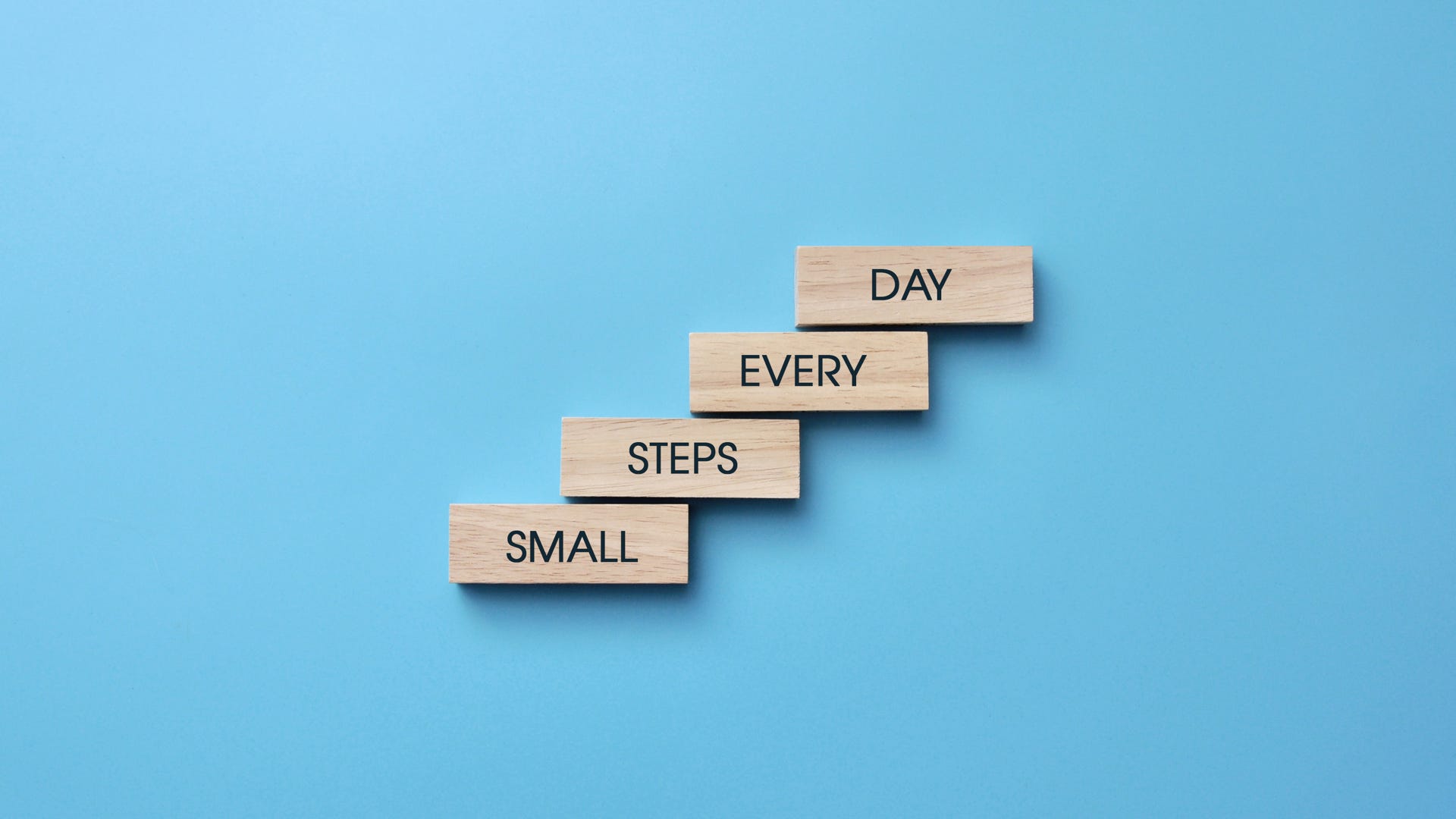
You do not need to reinvent yourself this year. You do not need extreme discipline or perfect routines. What you need is patience, consistency, and trust in the process. Small steps, taken regularly, lead to meaningful change.
As you move into this new year, consider choosing goals that feel supportive rather than punishing. Choose progress over perfection. Choose gentleness over pressure.
And remember: growth is not a race. It is a journey - one small, steady step at a time.
References
Biskas, M., Sirois, F. M., & Webb, T. L. (2023). Does psychoeducation help people to respond to goal lapses with self-compassion? Journal of Psychoeducational Assessment, 41(8), 839–851. https://doi.org/10.1177/07342829231189010
Business College Oxford. (2025, March 18). The power of habits – how small behavioral changes lead to long-term success. https://bcoxford.co.uk/the-power-of-habits-how-small-behavioral-changes-lead-to-long-term-success/
Discovery Place. (2023, April 19). The psychology of New Year’s resolutions. Discovery Place Science Museum. https://discoveryplace.org/stay-at-home-science/6091-2/
Palumbo, L. (2026, January 13). How to make a new year’s resolution that actually lasts. Psychology Today. https://www.psychologytoday.com/za/blog/the-paradox-of-strength/202601/how-to-make-a-new-years-resolution-that-actually-lasts
Rao, A. (2026, January 25). How to keep new year resolutions using psychology. https://party.alibaba.com/newyear/how-to-keep-new-year-resolutions-psychology
Tava Health. (2025, November 20). The psychology of forming healthy habits that stick. https://www.tavahealth.com/resources/forming-healthy-habits
Wolf, A. (2025, January 2). The psychology of setting goals. University of Delaware: UDaily. https://www.udel.edu/udaily/2024/january/psychology-goals-habits-new-years-resolutions/